John Teare – Freeman of Peel

John Teare Freeman of Peel

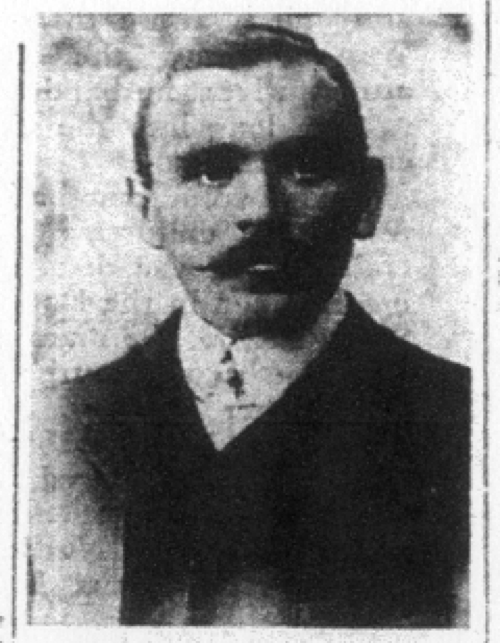
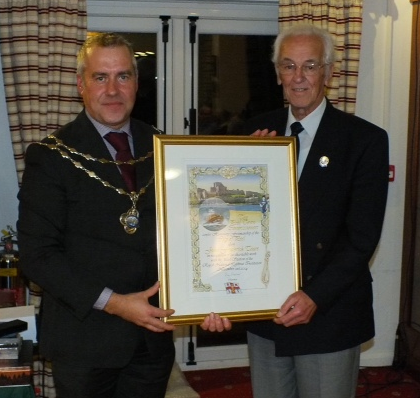
John Teare (right)       Freeman of Peel

John Teare has been awarded Freeman of Peel.  The honour was in recognition of his 41 years supporting the Royal National Lifeboat Institute charity in Peel. He was presented with an illuminated address by the Chairman of Peel Town Commissioners at Peel Golf Club on Friday 21 November.

John said one of the main advantages of becoming a Freeman seems to be that he now has the right to drive a flock of sheep up Michael Street. He hasn’t yet said when he intends to exercise this new right but sponsored sheep driving through Peel could be a great new method of fundraising.

Teare and Sons story

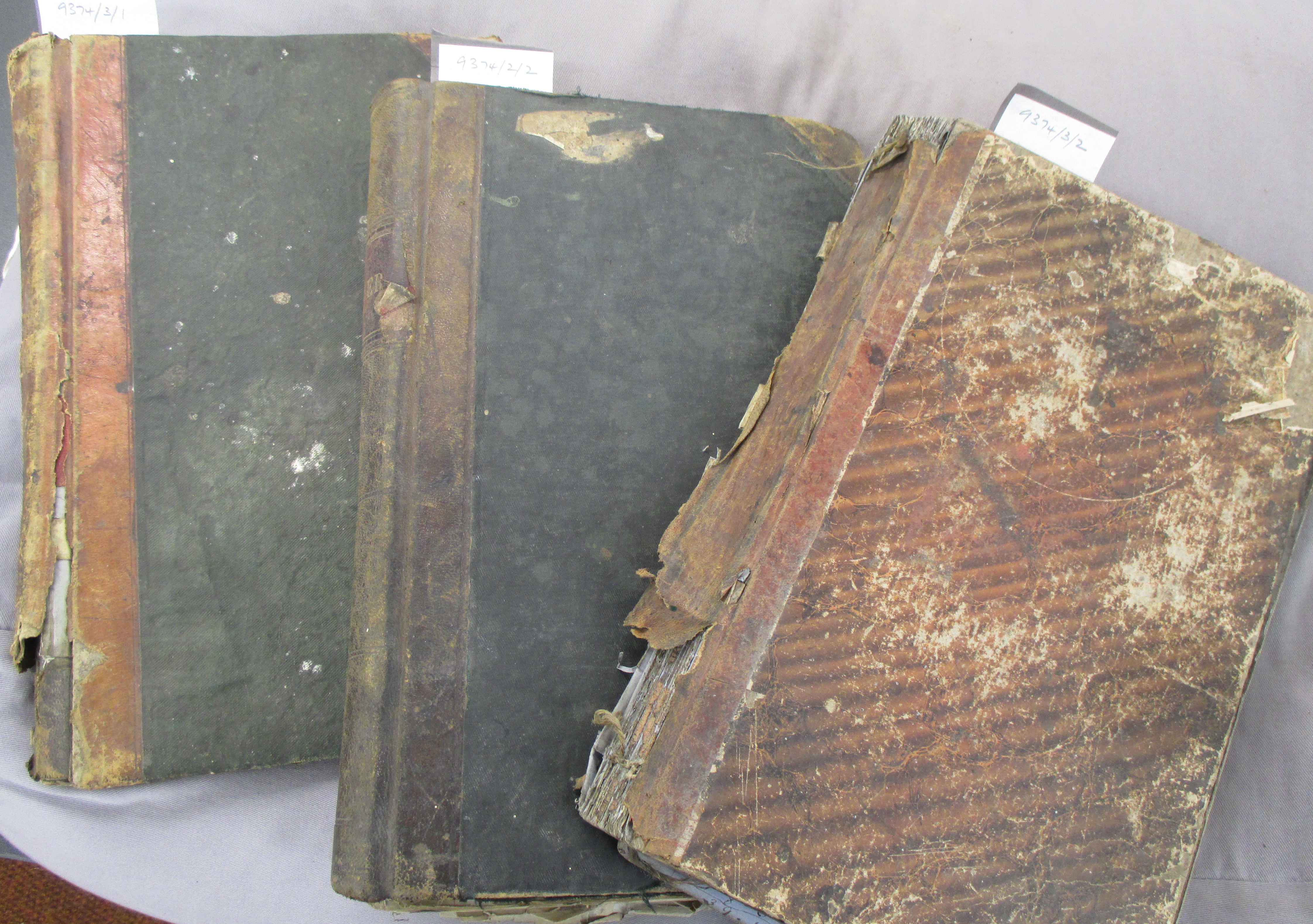
Ledgers Teare and Sons

Ledgers Teare and Sons

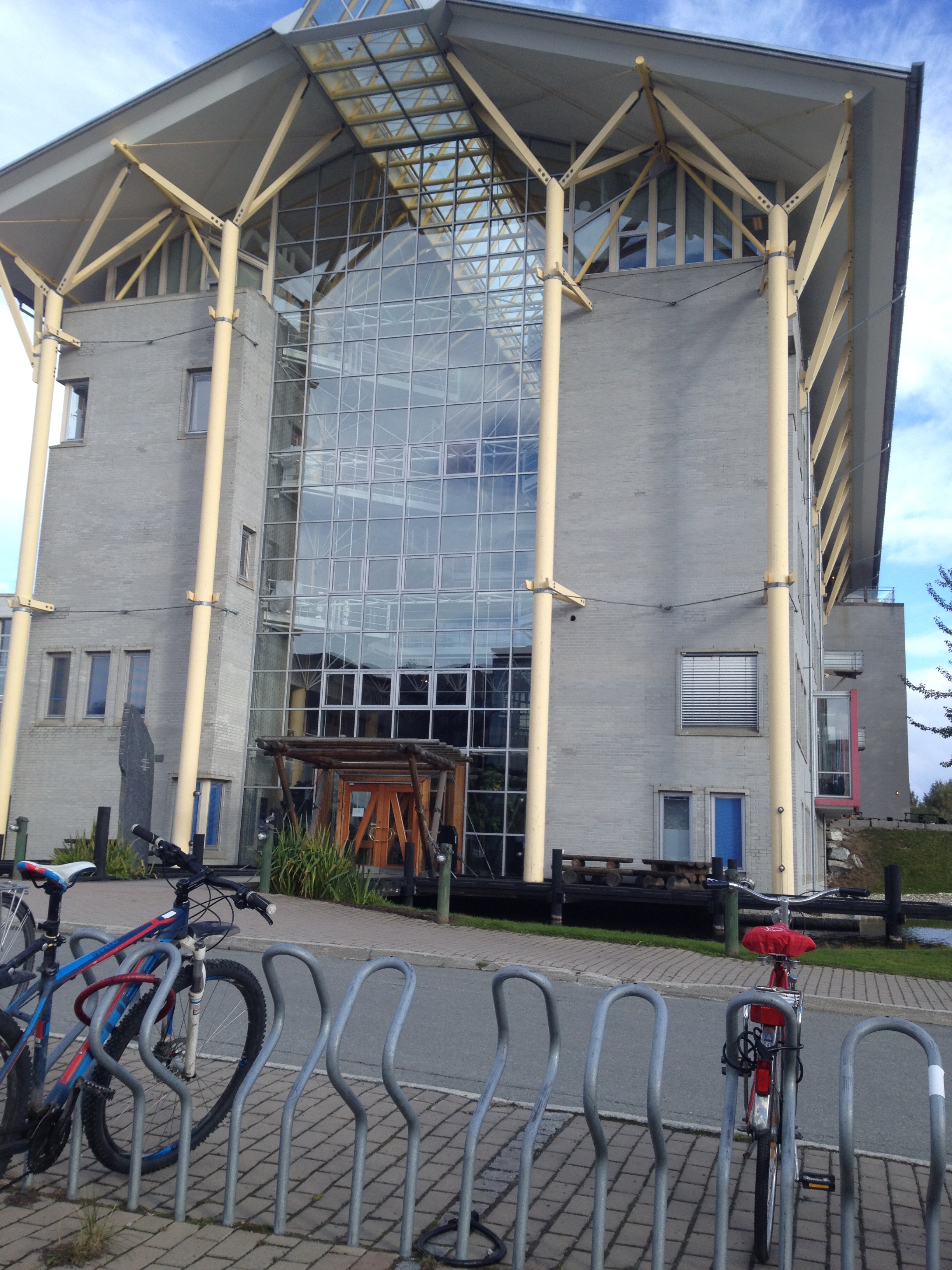
Norwegian College Fishery Science Tromsø

Norwegian College Fishery Science Tromsø

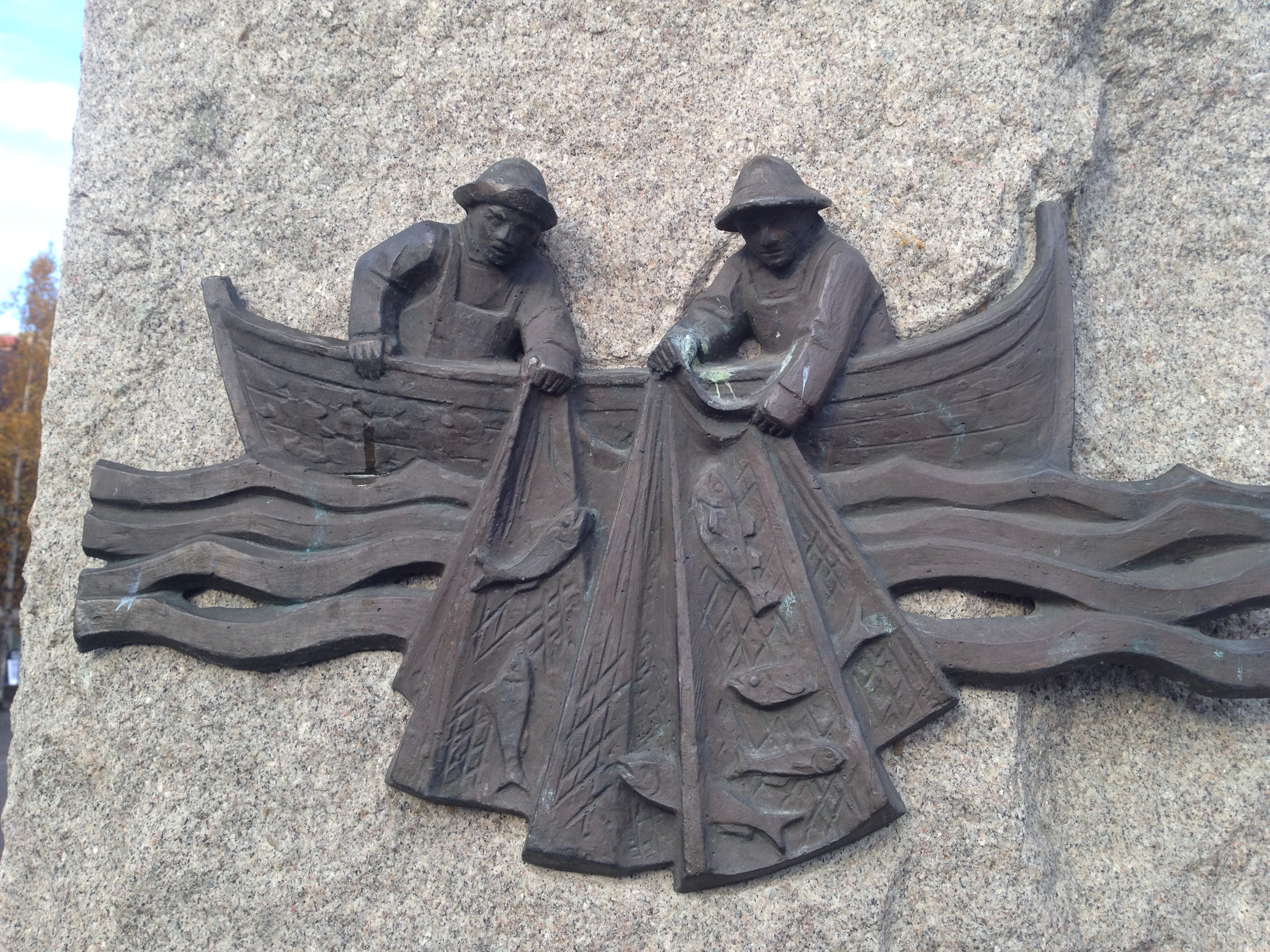
statue to fishermen Tromsø

statue to fishermen Tromsø


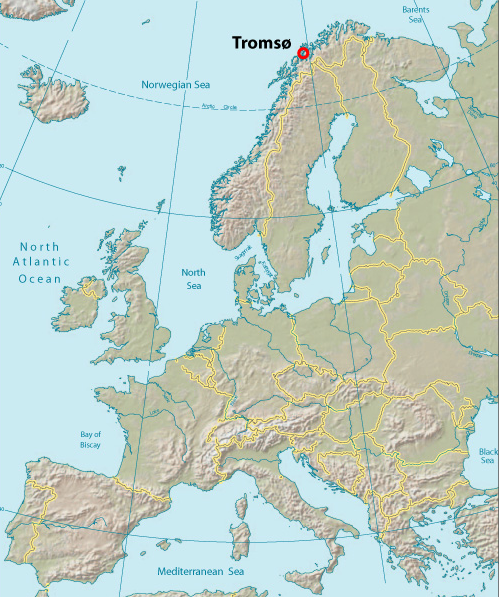
The Teare and Sons story was presented at the 14th North Atlantic Fisheries History conference held in the Norwegian College of Fisheries Science, Tromsø, Norway September 24-27th 2014. The papers from the conference will be published in a supplement to the International Journal of Marine History in 2015. A summary of the paper:

Using archives from the Teare family and Manx National Heritage in Douglas Michael Teare has been researching Teare and Sons, the family run company, founded in 1866 on The Quay, Peel.

Teare and Sons were sailmakers and ships chandlers supplying the rapidly growing fishing fleet during the 2nd half of the 19th century. They were also shareholders in fishing boats and trading schooners. By examining the company ledgers we can see how the daily operations in the chandlers worked and the growth of the company in customer numbers and turnover as the Manx fishing fleet expanded. Fishing boats needed to be prepared and equipped before the start of the Irish mackerel fishery in March, but they didn’t pay their bills until the end of the Manx herring fishing season in September. Teare and Sons had to take bank loans, using property as security, to finance their business.

At the end of the 19th century the company survived a series of difficulties. In 1898 the fishing smack Bee Hive, owned jointly by brothers William Edward and Henry Teare, was wrecked off Cambelltown, the schooner Lily Miles, in which the company had 8 shares, was wrecked on Longstone Rocks in 1899 and the schooner Phoebe (the company was a ⅜ shareholder) was run down by the steamship Duke of Lancaster in Belfast Loch in 1900 – it was not insured. But worse was to come when on 3 February 1900 the company’s bank, Dumbell’s, went bust. Suddenly Manx companies were unable to get credit from their suppliers who would only take new orders with cash up front. Dumbell’s had been an important bank in Peel and many other fishing boat shareholders and fishermen were faced with the same or an even worse financial disaster. As a result many fishermen lost everything, many boats were sold to Ireland or simply left to rot.

Teare and Sons survived and after WW1 ownership transferred to sailmakers John and Freddy Teare. Now they were making more sails for yachts and selling fuel to fishing boats. The business continued on The Quay in Peel until 1964 when Freddy Teare, the last sailmaker in Peel, died and the business closed.

Teare and Sons in Tromsø, Norway

The Teare and Sons story will be presented at the conference of the North Atlantic Fisheries History Association, which takes place in Tromsø, Norway 24-26 September 2014. This annual conference brings together maritime historians from around the world to discuss the scientific papers presented and topics related to fishery history.

Screen Shot 2014-09-19 at 13.40.54

Using archives from the Teare family and Manx National Heritage in Douglas Michael Teare has been researching Teare and Sons, the family run company, founded in 1866 on The Quay, Peel. Teare and Sons were sailmakers and ships chandlers supplying the rapidly growing fishing fleet during the 2nd half of the 19th century. They were also shareholders in fishing boats and trading schooners. By examining the company ledgers we can see how the daily operations in the chandlers worked and the growth of the company in terms of customer numbers and turnover as the Manx fishing fleet expanded.

Frederick Teare captures a German ship singlehanded – August 1914

frederick teareFrederick Teare was born in Peel the oldest son of William Edward Teare master sail maker and partner in Teare and Sons ships chandlers. He was 5ft 5in with brown eyes and hair and aged 37 at the start of WW1 when he was working in Rangoon, Burma – a river pilot bringing boats into port. Letters to home told the story of how his remarkable coolness resulted in the singlehanded capture of a German steamship. I first heard the story from his nephew Ken Teare and you can also find it in ‘This terrible ordeal’ Matthew Richardson’s excellent book about Manx involvement in WW1.

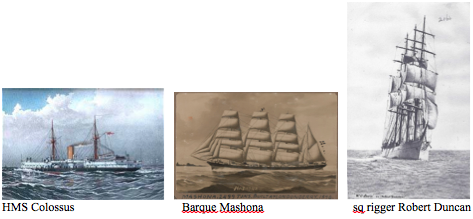
Apparently Frederick had always wanted to go to sea and despite a poor report on his mathematics from Patrick School he finished his schooling at Old Douglas Grammar School before realizing his ambition and he got his Captain’s ticket in 1904. He started his sailing career in 1893 with a 4 year apprenticeship on the four masted sailing barque Andelana out of Liverpool and then served another year after becoming an AB (able seaman). A brief spell in the RNR (Royal Naval Reserve) aboard HMS Collosus, a second class battleship built in1882 and at that time a coastguard ship based out of Holyhead was followed by 2nd mate positions on the French steamer La Madeleine and the Liverpool barque Mashona. He became 1st mate on the 1196 ton square rigger Robert Duncan out of Greenock in 1902.

ships

He continued serving in deep water vessels and at the start of WW1, one hundred years ago, Frederick was a pilot aboard the fast coasting steamer, Hindu, which would meet vessels wanting to be taken up the Irrawaddy River to Rangoon (now Yangon and the former capital city of Myanmar). Britain declared war on Germany on 4 August 1914, following an “unsatisfactory reply” to the British ultimatum that Belgium must be kept neutral. The Rangoon port authorities had already been informed that the large Hamburg- America Cargo Liner, Alesia, had passed through the Suez Canal on July 26th, destination Rangoon. According to Lloyds register she was fitted with wireless and with war declared everyone assumed she would head for a neutral port. So imagine the surprise and consternation when Captain Teare was called on deck by the lookout during a blinding squall to see a large boat flying the German flag passing under the stern of the pilot boat – it was the Alesia. There were many questions – What were her intentions? Was she armed? Did she intend to attack Rangoon port? And then a sharp eyed lookout noticed there was no wireless gear aloft . . . .

Frederick Teare was the pilot on duty and he had an ability not only to remain calm but also to  conceal any facial expression, which he used to his advantage. He packed his bag, leaving behind his copy of Field Service Regulations from his membership of the Rangoon Volunteer Rifles, and took the small boat to board the Alesia. On his way he scanned the decks and faces of the crew and the bearded captain to find any clues. When he got on board the captain asked him ‘So what about the war’ and Frederick bluffed that ‘It had fizzled out’. The captain left the bridge and Frederick was left with the 2nd officer on the bridge wondering if the Captain was also bluffing. When the Chief Officer came onto the bridge he also asked about the war and Frederick took his chance and suggested that ‘If the wireless was in good order they’d have as much news as him’. The reply confirmed that the radio had been dismantled for repairs and that had been very inconvenient.

Frederick could find no reason to believe this wasn’t true so he took the Alesia up river, past the military installation at Elephant Point where there was much activity and which he passed off as the annual military manoeuvres. They moved up river and anchored for the night then at the first streak of dawn the first officer reported there was a large launch alongside and soon Frederick saw two platoons of Royal Munster Fusiliers coming on board. The German Captain raged at him ‘What does this mean Pilot? to which Frederick coolly replied ‘I am sorry to say Captain that our countries are at war and I have captured your ship’.

One of the first maritime actions of the war and certainly the first to involve a Manxman was any other ship ever captured with so much cool and daring by just one man? Official reports of the time described Frederick Teare as a man ‘typical of the British officers bred by our tramp steamers’. The Alesia was subsequently offered for sale in the London Gazette as a prize along with other captured German merchantmen and was purchased by the Government of India.

Frederick Teare left Burma in 1915 with the Burma military contingent; he became a sergeant in the 2nd battalion Seaforth Highlanders (Lewis Gun Section). He was posted to France in April 1915 and would have taken part in the Second Ypres battle and on the Somme when the 2nd battalion Seaforth Highlanders attacked on Redan Ridge 1 July 1916 and near Le Transloy in October 1916. He was twice wounded during this time.

During the battle of Arras (the First Battle of the Scarpe), which ran from 9 – 14 April 1917, there was a disastrous action involving the 4th Division on the Green Line from Fampoux. At midday on the 11th April the 2nd Seaforth Highlanders and 1st Royal Irish Fusiliers attacked from the sunken lane between Fampoux and Gavrelle . They were spotted whilst forming up by the enemy in Roeux and on the railway embankment and subjected to shellfire. At zero hour, as they advanced over a kilometre of open ground behind a feeble artillery barrage they were hit by heavy machine gun fire from the railway embankment and Chemical Works. The Seaforths attacked with 12 officers and 420 men and suffered casualties of all 12 officers and 363 men. Only 57 men survived this attack unwounded. They were withdrawn from the line on 13th April. This action and the casualties from other battalions of Seaforths are commemorated with the Seaforths Cross at Fampoux.  Frederick Teare was wounded leading his platoon in this action and died of his wounds in no 26 military hospital on 23 April 1917 aged 40 years. He is buried in Etaples military cemetery and his name is recorded on the Peel War memorial.

Frederick’s brother Frank Teare served in the Canadian Army and was killed on the 10 April 1917 in the attack on Vimy Ridge just a few miles from Fampoux.

Back to WW1 Teare memorial page

More on Seaforth Highlanders and battle of Arras at http://jeremybanning.co.uk/tag/seaforth-highlanders/

Memorial to Seaforth Highlanders, Fampoux http://www.ww1cemeteries.com/othercemeteries/seaforth_highlanders_memorial.htm

Teare ‘Clan’ – IoM, UK, USA

Screen Shot 2014-04-25 at 18.07.21 The information about the mining Teare family from Patrick and their voyages to and from the IoM to the USA and Canada was sent me by John Teare jr. now living in West Virginia, USA. (see blog : Teare mining families – IoM, USA, Canada http://teareandsons.com/2014/04/teare-mining-families-iom-usa-canada/)

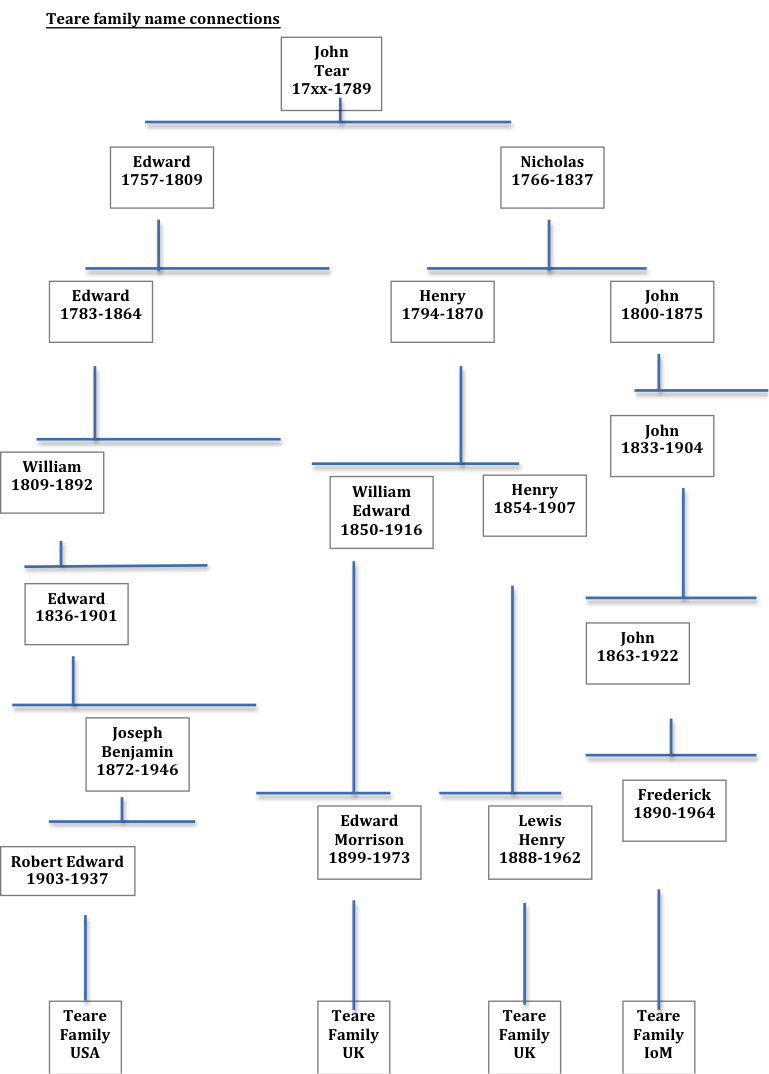
When we started comparing notes and family tree information John Teare jr. had another insight into the Teare family connections.

Of the Teare family from Peel, that ended up as ropers, sail makers and ships chandlers in the 19th century, there are now families living principally in IoM and UK. The UK families resulted from emigration to UK at the beginning of the 20th century, after Dumbells Bank crash in 1900, which had such a negative impact on the Manx economy and especially the fishing industry. There were other Peel Teare’s at this time that emigrated to Canada but at present no connections to living families.

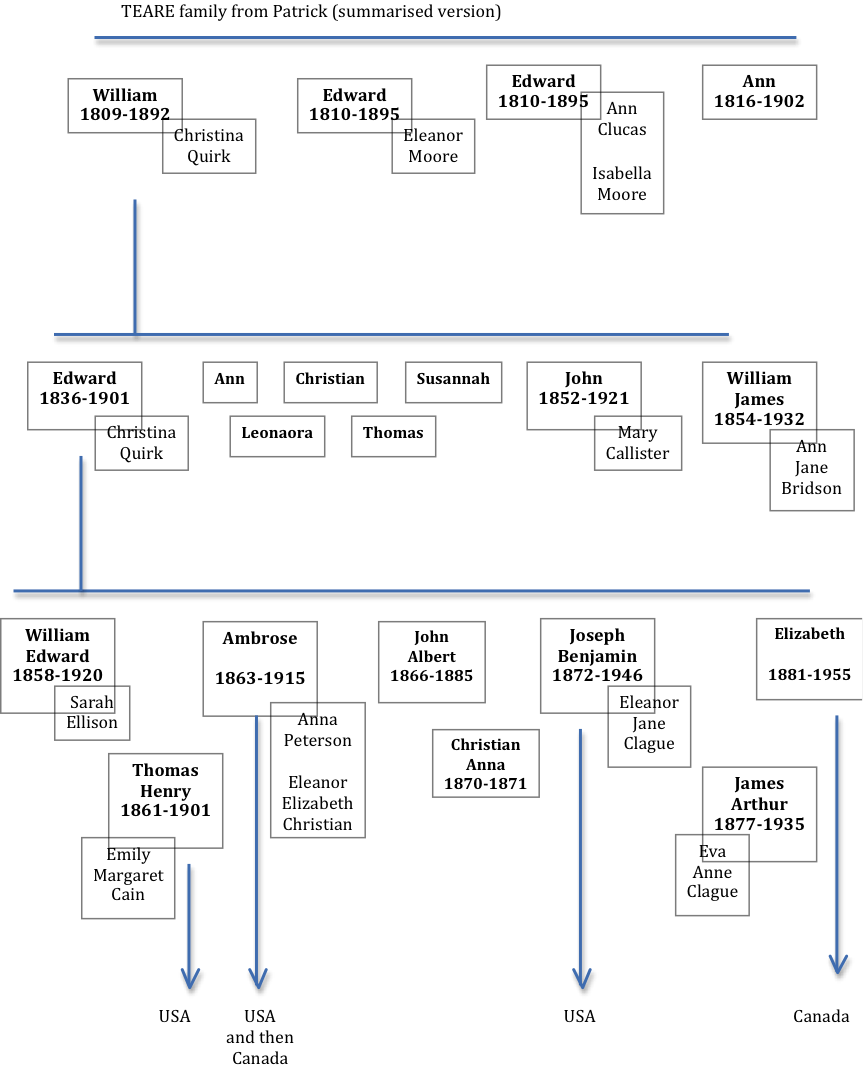
The IoM and UK Teare families had a common ancestor in Nicholas Teare (1766-1837) married to Mary Gibson (Cannel) (1770-1831).

It was John Teare jr. who noticed that Nicholas had a brother Edward (1757-1809) who was in his family tree. Edward married Margaret Caine (1766-1795) and these are the common ancestors for his family line, many of whom ended up in the USA and /or Canada.

The parents of Edward and Nicholas were John Tear (d 1789) and Jony Cosnahan (d 1797) so the Teare’s of Peel and the lead miners from Patrick are part of the same family.

At the end of the previous blog I commented on the contemporary accounts of how early Manx immigrants to the USA continued to speak Manx and were considered clannish. This summary family tree shows the connections of the Teare families now in IoM, UK, USA and Canada – and it’s only a summary there is much more detail if you’re interested.

It may have taken a couple of hundred years but the Teare family clan is connecting again.

Teare iom uk usa canada

Teare mining families – IoM, USA, Canada

miners

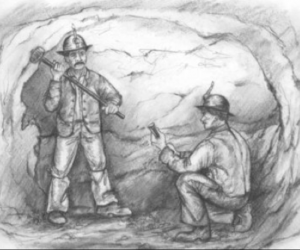
Mining has a long history on the Isle of Man with earliest records going back to 1246 when King Harald granted mining rights to the monks of Furness Abbey.  During the period from the 1830’s there was a great revival in the Manx mining industry and rapid development. In1848 the Foxdale mines had proved to be the most productive in the island. In 1871 a new lease was granted and the mine was renamed the Central Foxdale Mine, sometimes know as the east mine. The three main shafts were renamed ‘Amy’, ‘Elizabeth’ and ‘Taylors’. Elizabeth was the deepest at 145 fathoms and was the engine shaft. The mine had a workforce 70 men underground and 45 at the surface in 1882 and the annual production of ore was between three and four hundred tons. (http://www.manxmines.com/FOXDALE%20MINE.htm )

John Teare jr. from West Virgina, USA recently contacted me with information about Edward Teare and his family from Patrick. He takes up the story – Edward Teare and Elizabeth “Betsy” Kennaugh, both of Patrick Parish, had eight children. In 1861, aged 24 he was married to Elizabeth and working as a fisherman and agricultural labourer but by 1871 he was a miner as well as farming 6 acres. He continued working as a lead miner in the 1881, 1891 and 1901 censuses.

His eldest son, William Edward was born 1858, and another Teare relative reported that he had been in the USA at the time of the 1891 IoM census, but no record of his visit has been found, so far. He married Sarah Ellison and was living on Glen Rushen Road, working as a lead miner. He was a widower living in Douglas when he died in 1920.

Thomas Henry Teare was born 1861 in Patrick Parish and arrived at New York (age 26) along with William Christian (age 22) on March 10, 1888 aboard the “City of Chicago” and destined for Michigan. His wife Emily Margaret Cain (daughter of Philip Cainand Anne Callin) joined him later with their children and other children were born in Michigan. The family returned to the Isle of Man, arriving at Liverpool, England in 1899 aboard the “Campania”, prompted, I believe by his father’s failing health. He returned to the USA without the family and in 1900 he was boarding in Ishpeming but in 1901 he was in Port Erin (his father died 1 April 1901) and then he returned to America without his family, sailing from Liverpool on 4 May 1901 and arriving New York aboard the Camapnia on 11 May. He was killed in a mining accident 23 December 1901 (ironically, at the Foxdale mine in Ishpeming) and buried in Ishpeming. His widow Emily and 4 children arrived in Boston, Massachusetts in May 1907 aboard the Cymric destined for Cobalt, Ontario, Canada to join her brother, Cesar Cain. His son, Thomas Henry Jr., now age 16 is listed as a miner. Emily died in Timmons, Cochrane County, Ontario, Canada in 1932.

Ambrose Teare was born in 1863 in Patrick Parish but by 1900 the census shows him living in Ishpeming, Michigan with his Swedish born wife Annie Peterson (married about 1894) and adopted daughter Kate. He arrived in the US in 1886 and was working as an iron miner. In 1910 the family was living in Mace, Shoshone County, Idaho and he was a Quartz miner. Also in the household was Thomas Quilliam aged 43, also a Quartz miner. The following week Ambrose, Annie and Kate crossed the Canadian border at Kingsgate, British Columbia bound for Langdon and in 1911 the family is found at McLeod, Alberta, Canada where he is a farmer. In the same housing unit are Mark Crellin, his brother in law, married to Elizabeth, the youngest of Edward and Elizabeth’s children. After Annie died in 1913 Ambrose remarried to Eleanor Elizabeth Christian born Glen Maye, Patrick about 1875. They had one child, John Frederick Teare, born 1914 in Alberta Canada. Ambrose died in 1915 at Carseland, Strathmore, Alberta, Canada.

John Albert Teare was born Patrick 1866 and died 1885. He was a fisherman, aboard the Tartar in 1881 with James Cubbon, age 73.
tree2


Joseph Benjamin Teare, my great grandfather was born in 1872 in Patrick. In 1891 he was the oldest child still living with his parents at Kerroodhoo, Foxdale. He was a lead miner like his father. He arrived at Ellis Island, New York on 16 Apr 1896 aboard the “Teutonic” sailing from Liverpool; he traveled with Thomas Garrett 27, Fred Quine 25, and Wilfred Shimmin 21, all listed as Manx miners. He came back to the IoM and married Eleanor Jane Clague at Patrick Parish 01 Jun 1899 before returning, without his wife on his second voyage to the US on the S.S. Servia in 1900: passenger index shows that his 2 brothers (Thomas and Ambrose) are in Ishpeming, Michigan. On this trip he traveled with John McQuiggan, 25, Irish from Foxdale, who was previously in U.S. in 1892 for 2 years and was going to Ishpeming to visit his nephew. Joseph and Eleanor had two children whilst in Ishpeming, Robert Edward (called Eddie) born 1903 and Eva Elizabeth born 1906. The family moved to Cuyuna, Minnesota in 1911 and then to Crosby, Crow Wing County, Minnesota in 1912. By 1930 the census shows Joseph is still an iron ore miner. Eva, a schoolteacher, is living at home. She never married. Robert married my grandmother, Louise Marion Simpson in 1930 in Brainerd, Crow Wing County, Minnesota and the newlyweds lived in Crosby; Robert was a grocery deliveryman. Robert and Louise had three children, all born in Crosby: Robert Edward born 1931, Joseph Moses born 1932 and John Richard (my father) born 1934. My grandfather died when the children were young in 1937 and my grandmother, her mother Alice Simpson and the three boys moved to Philadelphia. Robert grew up to be a butcher, Joseph was an airline mechanic and my father John an insurance salesman.

John Teare jr. now lives in West Virginia. This story gives so many insights into where families started out and then end up in the world and the work they did. Also the voyages made between USA and IoM, in both directions. The number of marriages recorded to people with Manx names, even after leaving the island, is fascinating and fits with contemporary accounts of early Manx immigrants to the USA which show how they settled in the same areas, they spoke Manx and were considered clannish.
Schoolmaster Tear suspended . . .

William Tear,was buried at Jurby in 1756. He is mentioned by A. W. Moore in Manx Worthies (1901) – “Manx schoolmasters have usually been clergymen also. Of the Schoolmaster whose name follows we know nothing except from his epitaph.”

But as you will see that’s not quite all we know.

The original epitaph in latin was translated by the Rev. John Quine:

Remains of Sir (Bachelor) Will.Tear, schoolmaster of Peel, buried.July 5th, 1756, in the 74th year of his age.

By way of epitaph of WILLIAM TEAR, an author having written.*

Death, alas! the penalty indeed (of life) is nevertheless a most certain portal of a blessed life, and that ‘I glad one to the good.

Although the bonds of death retain me here temporarily, hope nevertheless in Christ, (a hope) that will not die, remaineth.

In the merits of Christ and in the pitying Father’s love is my humble hope: in this faith I die.

Thou God Thyself knowest. my heart and the heart’s secrets, to whom obscurity not hidden all things are open.

Here nothing worthy to be descried is; alas ! all things are vain.

Therefore come blessed (life) and vain life go.

*literally, “having been written.”

However that’s not all we know of him because this Peel schoolmaster did not lead an altogether blameless life.  Because of a ‘great scandal given by his disorderly life’  he was suspended for 6 months in 1741 following what today we would call a ‘disciplinary hearing’ the results of which were documented by Bishop Wilson:

“Whereas Upon the 31st of August last we with our Vicars General (the Vicars of Kk. Patrick and Germain with some gentlemen present) were obliged to suspend Mr William Tear the late Schoolmaster of Peel town ab officio and beneficio for the space of six months because of the great scandal given by his Disorderly life. And that at the time of our proceeding in that case Mr Tear afores’d upon our Reproving him for the Irregulartys he had been guilty of Resigned the School into our hands, declaring openly that he would not teach nor be concerned with the said School any longer.’ However out of a Fatherly Compassion towards him and upon his humble petitions wherein he sorrowfully lamented his Irregularitys and great Irreverence as also in regard that the Vicars of Patrick and German together with the Town Wardens have certified under their hands that the peticoner during his suspension has behav’d himself soberly and unblameably. We do hereby upon trial of his good Behaviour and in hopes of a thorough Reformation, permit him the said Mr. Tear to teach the Free School in Peel town, and do also Impower him to Receive the stipend settled thereon. And this to continue during our pleasure. And We do Require and Expect that the Vicars of Patrick and German as also the Wardens with the principal Inhabitants of the Town, as they tender the Welfare of the place, the Education of their Children and Our good Intent, that without fail they signify unto Us, if this Our Indulgence to the petitioner has not its due Effect upon him.

Given under our hands at Bishop’s Court, this 8th of March, 1741

THO. SODOR AND MAN.
Vera Copia pr. ED. MOORE, Ep. Regr.

8th March, 1741.”

So what the specific offences were we do not know. Bishop Wilson was a rigid disciplinarian and would not tolerate in any of his Clergy or any others under his authority any deviations from the straight path. Perhaps today we would not have considered it so serious, was he a little too fond of an occasional or even regular drink? We don’t know. Whatever he did wrong, ‘during his suspension has behav’d himself soberly and unblameably’, so he was reinstated and remained in the School for another 15 years up to the time of his death.

And then there’s the church candlesticks . . . . . In 1902, when St Peters Church was undergoing restoration work a pair of brass Altar Candlesticks were discovered in a cupboard. They were covered with dirt and verdigris, and one of them was broken into two pieces.

They were both inscribed
– ‘The Gift of M. Est. Tear to Kk. Germain,1746.’


Esther Tear (nee Harrison) was the wife of William Tear, that same schoolmaster in Peel for 52 years. She died in 1756, a month after her husband. She left to the Poor of Peel a field called ‘Close Beg,’ and a meadow called ‘Lace’s Meadow.’

Who invented the kipper ?

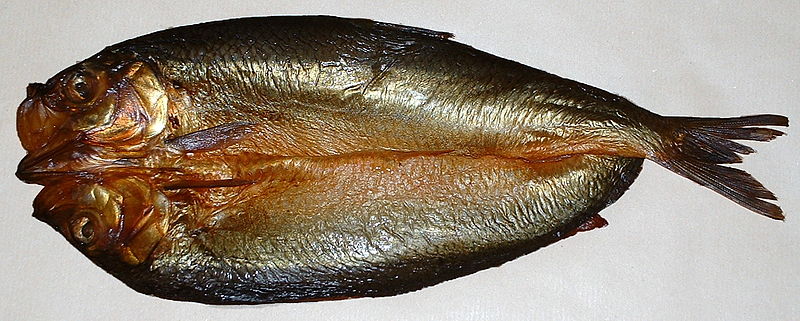
A kipper is a whole herring that has been split butterfly fashion from tail to head along the dorsal ridge, gutted, salted or pickled, and cold smoked over smouldering woodchips (typically oak).

The word kipper could have its origins in the old English ‘kippian’ to spawn, ‘kipe’ a basket to catch fish or even another theory which traces the word back to ‘kip’ the small beak developed by male salmon in the breeding season.

In any case the word is very old, as is the idea of preserving fish by smoking, much older than any more recent claims for the discovery of the process, usually by accident. For instance Thomas Nashe wrote in 1599 about a fisherman from Great Yarmouth who discovered smoking herring by accident and another story of the accidental invention of kipper is set in 1843, with John Woodger of Seahouses, Northumberland who left fish for processing overnight in a room with a smoking stove.

A kipper is also sometimes referred to as a red herring, although particularly strong curing is required to produce a truly red kipper. The term appears in a mid 13th century poem ‘He eteþ no ffyssh But heryng red’ and later Samuel Pepys recorded in his diary entry of 28 February 1660 ‘up in the morning, and had some red herrings to our breakfast, while my boot-heel was a-mending, by the same token the boy left the hole as big as it was before’. Kipper kedgeree appeared on victorian breakfast tables and kippers were frequently a high tea or supper treat in the first half of the 20th century.

The dyeing of kippers was introduced as an economy measure in WW1 so reducing the smoking time and allowing them to be sold quickly, easily and for a substantially greater profit. Kippers were originally dyed using a coal tar dye called Brown FK (abbreviation of “For Kippers”) but today, kippers are usually brine dyed using a natural annoto dye, giving the fish a deeper orange/yellow colour. However kippers from the Isle of Man are not dyed and the smoking time is extended in the traditional manner. Thousands are produced annually in Peel, where there are two kipper houses, Moore’s Kipper Yard (founded 1882) and Devereau and Son (founded 1884). The Manx word for kipper is skeddan jiarg, literally translated this is ‘red herring’.

Delia Smith says ‘Look for plumpness, oiliness, a silvery golden colour and a good smoky smell in a kipper. All fish tastes better cooked on the bone, and kippers are no exception.’ You can bake kippers in a hot oven and grilling is very good although others will swear that the only method is to ‘jug’ them in boiling water and serve with a knob of butter. Both kippers and herrings taste especially good cooked on a barbecue out in the open air and then there’s no problem for smell. Or why not try a kedgeree – delicious.

What job for a Teare in 1863 ?

One of the very interesting things about family history is finding out the occupations of your relatives from census returns or trade directories. So I took a look through the Thwaites Directory of 1863 for the Isle of Man to see what sort of trades the Teare families were involved in. There are Thwaites Directories covering Douglas, Ramsey, Castletown and Peel. You can find them on Frances Coakley’s Manx Notebook (http://www.isle-of-man.com/manxnotebook) under the town name.

Sometimes names of jobs have not changed much since the 19th century. A plumber, painter, banker or doctor are all job types that sit easily with us today but others are today very rare, non existent or have changed so much from their original usage. So anything to do with horses such as livery, stable keepers, which would have been quite common and even associated trades like black smith are now quite specialist. Coal merchants have almost disappeared and boot and shoe makers, drapers and grocers although recognizable names are not necessarily the places we would search out today to do our shopping. So just as today we would struggle to find a guano importer in Ramsey (or anywhere else on the island?) then an estate agent or a garden centre and an IT consultant or even a job centre of course don’t figure at all in Thwaites Directory.

Douglas
BOOT and SHOE MAKERS: Teare Thomas 11 Great Nelson Street, h 1 St Georges Street
LIVERY STABLE KEEPERS and HORSE GIG and CAB PROPRIETORS: Teare Daniel Castle Mona Lawn
LODGING HOUSES: Tear Margaret Finch Road
SHOPKEEPERS: Teare Ann St Georges Street, Teare Philip Back Strand Street
WOODTURNERS: Teare Thomas Queen St
Ramsey
HARBOUR MASTER: Teare Charles, 11 Albert street
TEARE and KERRUISH: Importer of British and foreign seeds, guano, &c., Customs’, ship, and bill broker, money scrivener, commission agent,&c., Custom House Quay; and brick and tile maker, Mona bank; Teare Robert,  h. Summerland
COAL MERCHANTS: Teare Charles, liarbonr Office; h. Albert street
DRAPERS (LINEN AND WOOLLEN): Teare Thomas, Parliament street
GROCERS, & TEA & PROVISION DEALERS: Teare James, 13 Church street, Teare Robert, Sandy road
HOTELS, INNS, AND TAVERNS: Commercial, Margaret Teare, South Quay
LODGING HOUSES: Teare Anne,4 Solway terrace
SURGEON: Teare Thomas Murray, 9 Auckland terrace
TIMBER MERCHANTS: Teare Robert, Sandy road
Peel
FARMER: Tear Robert Douglas St
ROPEMAKERS: Tear John Quay Lane
Listed in the Peel directory but without a trade:
Tear Mrs Elizabeth Douglas St – the 1861 census lists her occupation as a nurse. She is a widow (55) living with her two daughters, May Alice (unmarried 26) and Elizabeth Thompson (married 24), who are both dressmakers, also her granddaughter Elizabeth Thompson (3)
Teare Mr William Factory Lane – I can find no William Teare in Factory Lane in the 1861 or 1871 census
Castletown
There are no traders with the name Teare listed in the Castltown directory.

“You’re so funny and amazing! You must be a Chandler.”


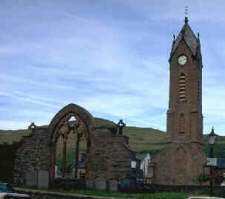
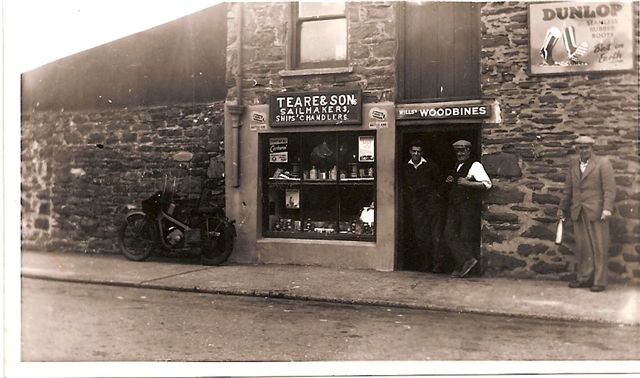
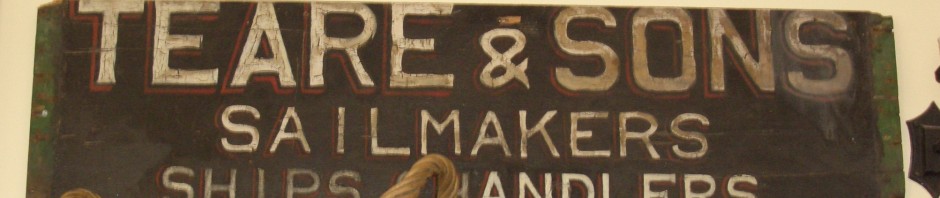
Teare and Sons ships chandler The Quay Peel

Often we use words and phrases everyday without really thinking about why and where they come from. Then occasionally someone asks a question or brings something to our attention and we have an insight into the origins of our language. That set me thinking about chandler. Why do we use this word in association with a specialist supplier of materials for ships? Why not merchant or shop?

The dictionary definition of a chandler or ship chandler is ‘a dealer in supplies and equipment for ships and boats’ and chandlery  ‘the shop or business of a chandler’. That doesn’t seem to help much until you see the historical definitions as ‘a dealer in household items such as oil, soap, paint and groceries’ and ‘a person who makes and sells candles’. That makes sense because the origin of the word chandler is from Old French chandelier through Middle English denoting a candle maker and candle seller.

Candles making would have involved a detailed knowledge of oils and fats (also the basis of making soap) and so the progression from a candle maker and seller to a store selling household items, including presumably candles, also seems to follow a certain logic. So why don’t we go to the chandlers anymore to buy our household supplies or maybe more pertinently  – why don’t supermarkets have a chandlery section? Well I guess it just went out of fashion and we use other words – household supplies, hardware, cleaning supplies, DIY, . . . . .

The day books in the Manx National library show that a traditional chandlery like Teare and Sons supplied fishing and sailing ships with a large range of items such as rope, paint, turpentine, paraffin oil, lard, oakum, nails, brooms, mops, galvanized buckets, charts and even candles. A ship chandlery business was central to the existence and the social and political dynamics of ports.

Today’s chandlers deal more in goods typical for commercial ships. Often they supply the crew’s food, ship’s maintenance supplies, cleaning compounds as well as more typically maritime supplies like ropes. Typically, the ship owner has a line of credit with the chandler and is billed for anything delivered to his ship. So in a foreign port they don’t have to spend time searching for materials and then paying in foreign currency.

Then as now there is a high level of service demanded, orders must be fulfilled quickly and completely and the business operates on credit. Commercial ships turn around quickly, any delay is expensive and so the services of a dependable ship chandler are indispensable.

So is it the combination of high levels of customer service and the romantic candlelight that accounts for the modern meaning of chandler? Check out the online Urban Dictionary to find that a chandler is ‘an amazing guy that is extremely funny and sweet. He may not be your first choice in a guy, but after you date him you’ll want him forever. He listens to everything you say and he’s protective if someone hurts you. You can trust him with anything and know he won’t tell anyone because it’s just who he is. He’s a great guy and one of the best boyfriends a girl could have. He’s cute too and the best kisser on the planet. “You’re so funny and amazing! You must be a Chandler.” ‘